High above the forest floor, suspended between branches and sky, treehouses have evolved far beyond childhood fantasies. Today, they represent some of the most thoughtful examples of contemporary architecture spaces that celebrate nature rather than dominate it. Around the world, visionary architects and designers are reimagining what it means to live among the trees, crafting structures that merge sustainability, craftsmanship, and design innovation.
From the serene forests of Maine to the tropical landscapes of Bali and the icy wilderness of Sweden, these extraordinary treehouses demonstrate how architecture can exist in harmony with its surroundings. Built with natural materials like timber, bamboo, and reclaimed wood, they embody a philosophy of minimal environmental impact while offering immersive experiences within nature.
Here are ten of the most remarkable treehouses across the globe each one redefining the relationship between architecture and the natural world.
1. The Copper Fox Treehouse – Maine, USA
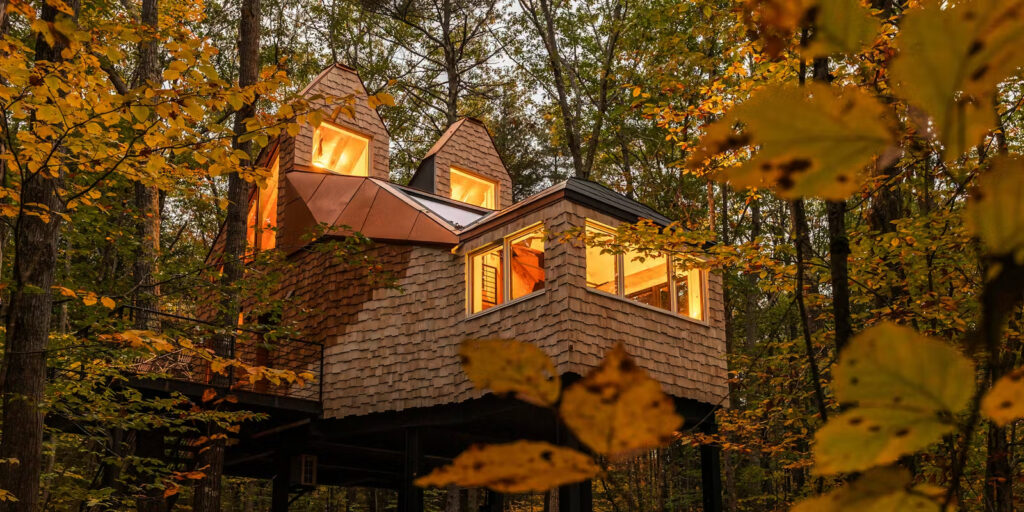
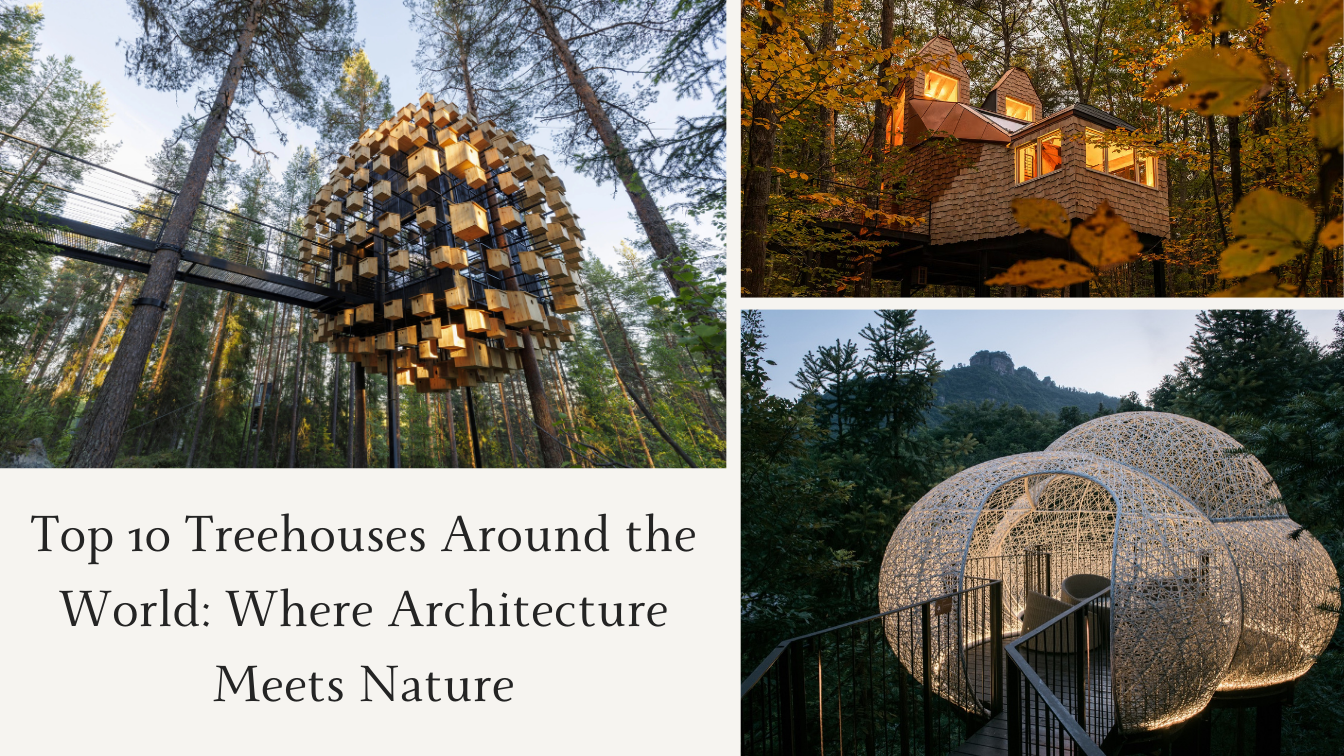
Nestled deep within the forests of Maine, the Copper Fox Treehouse is a stunning example of rustic sophistication. Designed with a warm palette of natural timber and copper accents, this elevated retreat blends seamlessly with its woodland surroundings. The architecture embraces the rugged beauty of the forest. Large glass panels frame views of towering pine trees, allowing natural light to flood the interiors. The copper elements develop a natural patina over time, allowing the structure to age gracefully with its environment. What makes this treehouse exceptional is its commitment to environmental sensitivity. The structure is built around existing trees rather than altering them, ensuring minimal disturbance to the ecosystem. Elevated walkways connect different sections, creating the feeling of moving through a living forest canopy. Staying here feels less like occupying a building and more like inhabiting the forest itself.
2. Bambu Indah Treehouse – Bali, Indonesia
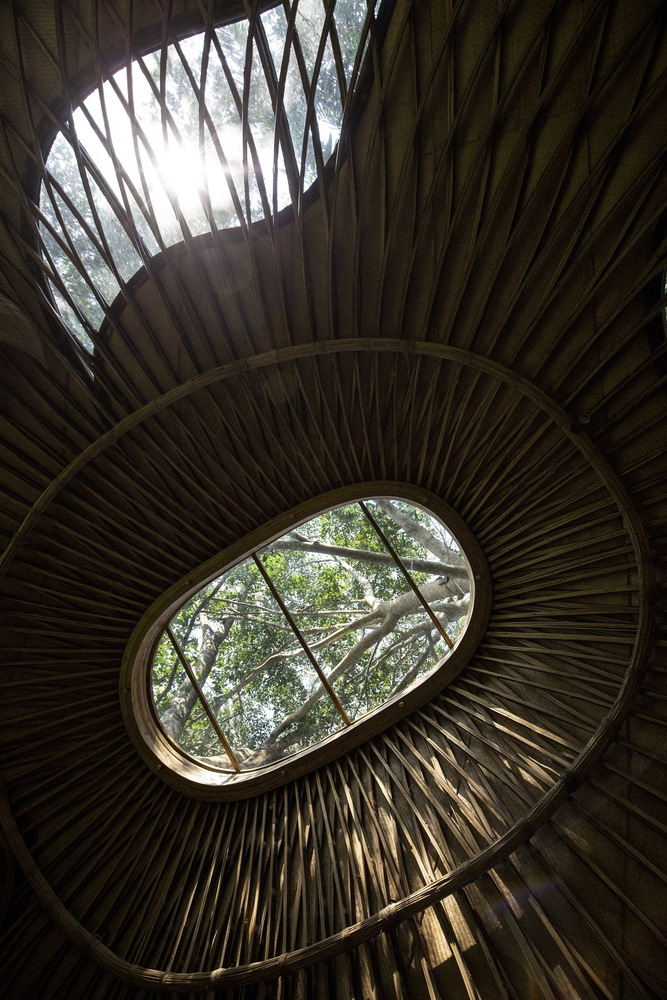
In the lush jungles of Bali, the Bambu Indah Treehouse represents one of the most poetic expressions of sustainable architecture. Built almost entirely from bamboo, the structure reflects traditional Indonesian craftsmanship while embracing modern design principles. Bamboo, often called “green steel,” is one of the most sustainable building materials in the world. It grows rapidly, requires minimal processing, and possesses remarkable structural strength. The designers of Bambu Indah use this material to create flowing organic forms that mimic the natural curves of the surrounding jungle. Open-air living spaces allow the tropical breeze to circulate freely, eliminating the need for artificial cooling. Floors, walls, and furniture are crafted from bamboo and reclaimed wood, reinforcing the property’s eco-conscious philosophy.
3. Biosphere Tree Hotel- Harads, Sweden
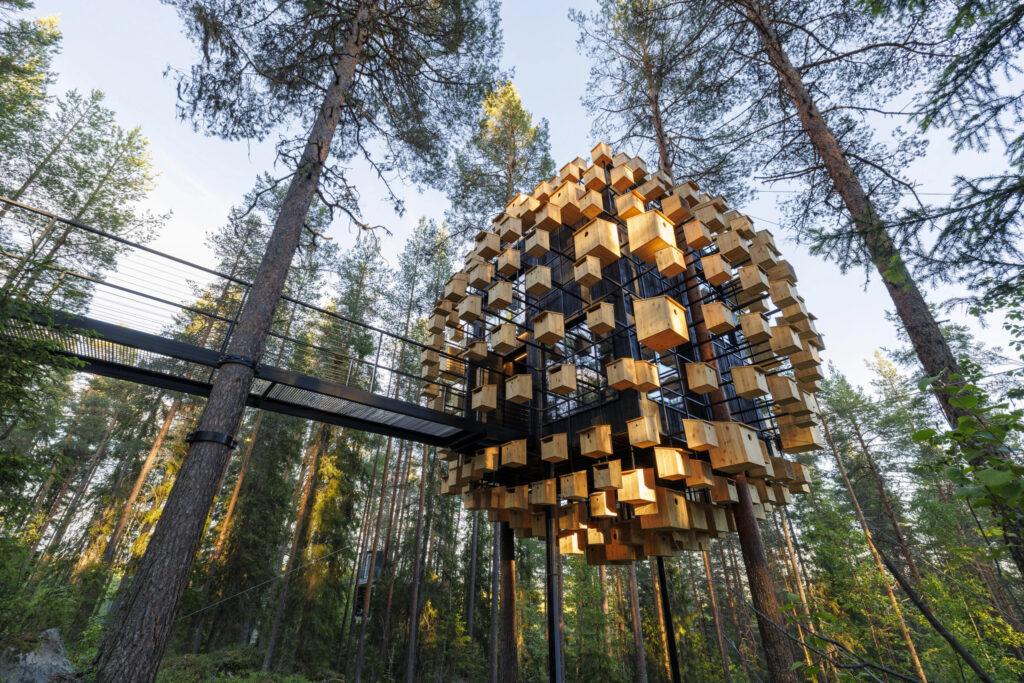
Perhaps one of the most striking treehouses ever built, the Biosphere at Treehotel in northern Sweden is an architectural marvel. Suspended high among the pine trees, this spherical structure is wrapped in hundreds of birdhouses that create both an ecological and visual statement. The design aims to support local bird populations while demonstrating how architecture can contribute positively to biodiversity. The exterior is covered with more than 350 nesting boxes, turning the building into a thriving habitat for birds. Inside, the design contrasts the rugged exterior with sleek Scandinavian minimalism. Clean lines, soft lighting, and panoramic windows create a tranquil environment surrounded by the northern forest. The Biosphere is not only a place to stay, it is a living experiment in ecological architecture.
4. Bert Treehouse- Turnau, Austria
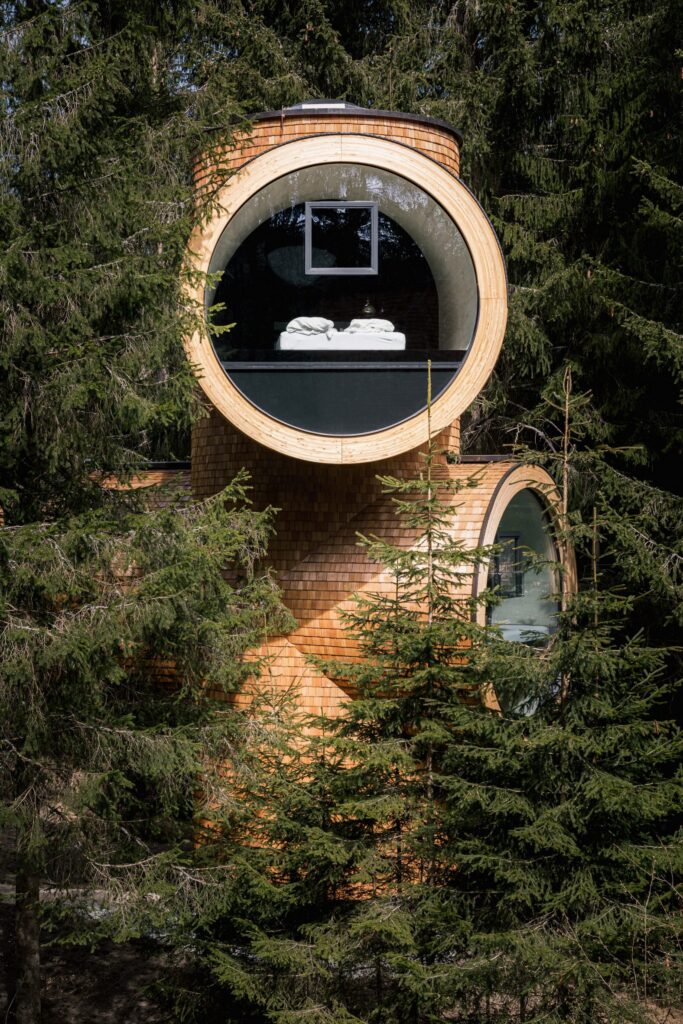
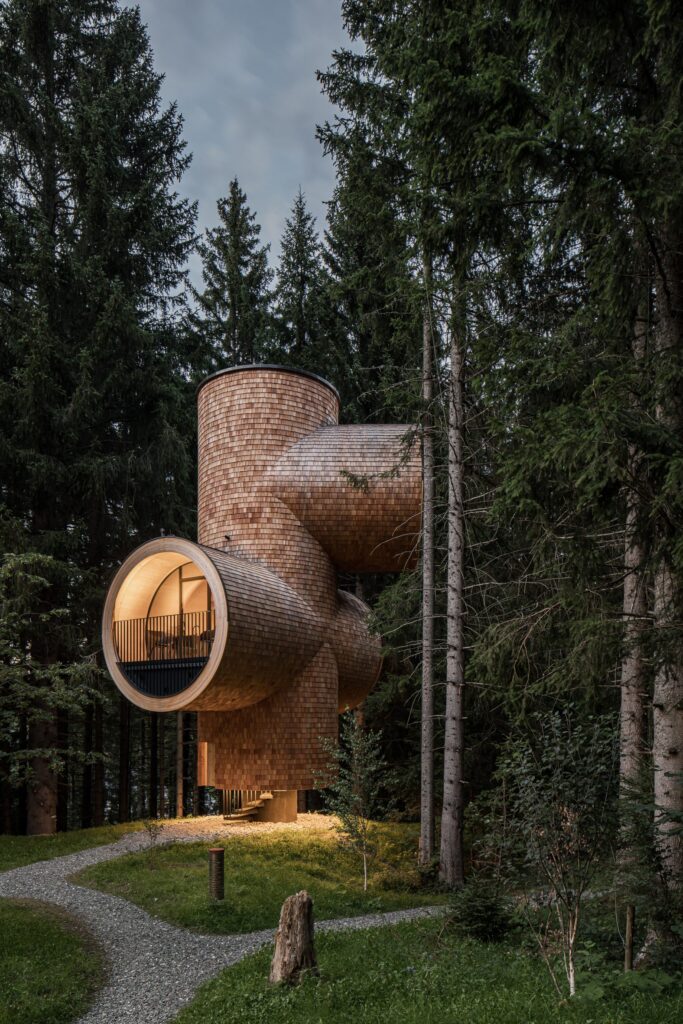
Hidden within the Alpine landscapes of Turnau, Austria, Bert by Studio Precht is a striking example of experimental architecture inspired by nature itself. Designed by the renowned architecture firm Studio Precht, the structure embraces a playful yet thoughtful concept, stacked modular wooden forms that resemble interlocking tree trunks. The design uses sustainably sourced timber and a prefabricated construction system that minimizes environmental disruption. Each module is carefully positioned among the surrounding trees, allowing the building to integrate naturally with the forest terrain. Large windows frame breathtaking views of the Austrian Alps, while wooden interiors create a warm and calming atmosphere. What makes Bert particularly unique is its flexibility the modular structure can expand or adapt depending on the landscape and the needs of the occupants. By blending experimental design with ecological sensitivity, Studio Precht demonstrates how architecture can evolve alongside nature rather than competing with it.
5. Loma Mar Tree House by Jay Nelson Studio – California, USA
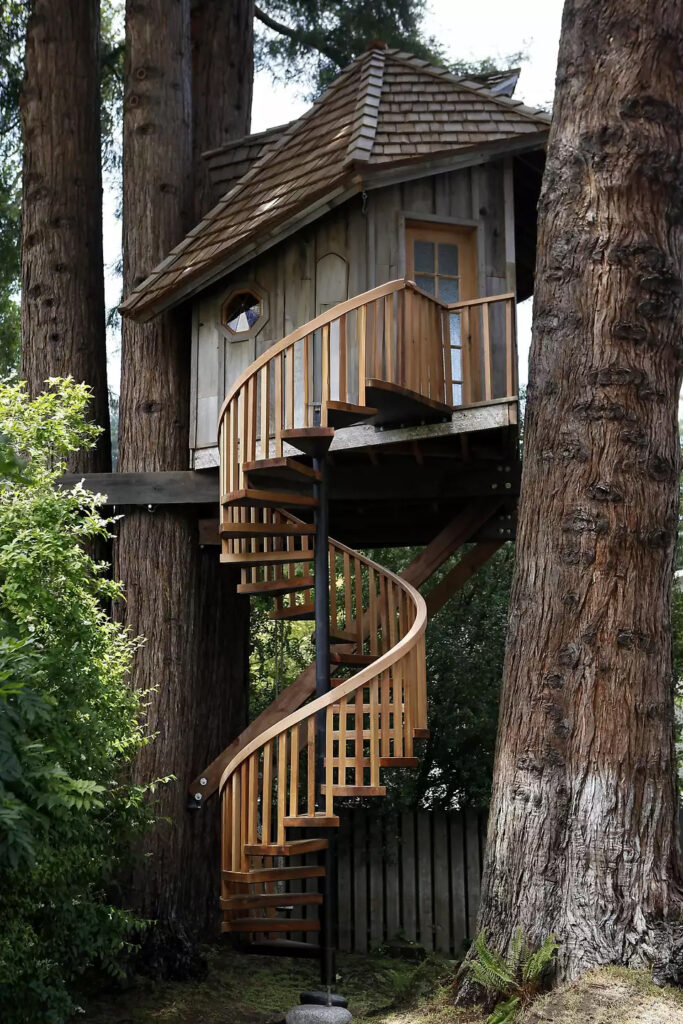
Located in the serene redwood forests of California, the Loma Mar Tree House designed by Jay Nelson Studio reflects a whimsical yet refined approach to treehouse architecture. Perched gently among towering trees, the structure showcases handcrafted wooden detailing and curved organic forms that mirror the natural environment. Jay Nelson, known for his artistic approach to architecture, designed the treehouse as both a sculptural piece and a functional living space. The treehouse features panoramic windows that open toward the dense Californian forest, allowing light and nature to flow freely into the interiors. The use of reclaimed wood and hand-built construction techniques emphasizes craftsmanship and sustainability. Rather than imposing itself on the landscape, the Loma Mar Tree House feels like a natural extension of the forest canopy a peaceful retreat that celebrates creativity, nature, and quiet living.
6. Pigna by Beltrame Studio – Malborghetto, Italy
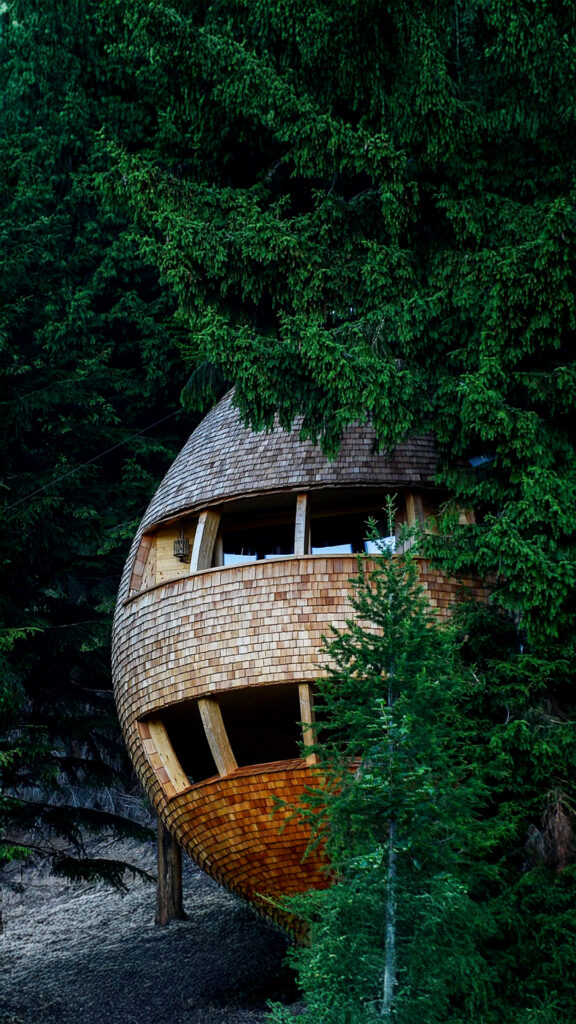
Deep in the Italian Alps near Malborghetto stands Pigna, an extraordinary treehouse designed by Beltrame Studio. The name “Pigna,” meaning pinecone in Italian, perfectly captures the inspiration behind its distinctive design. The structure’s form resembles a large pinecone suspended among trees, with wooden shingles arranged in overlapping layers that mimic natural patterns found in forest ecosystems. Built primarily from locally sourced timber, the treehouse blends beautifully with the surrounding alpine landscape. Inside, the interior is compact yet thoughtfully designed. Soft natural lighting, warm wooden textures, and carefully placed windows create a cozy sanctuary that immerses guests in the tranquil mountain environment. Pigna is a testament to how architecture can draw inspiration directly from nature’s forms, transforming organic shapes into elegant, sustainable living spaces.
7. Qiyun Mountain UFO by Atelier Design Continuum – Qiyun Mountain, China
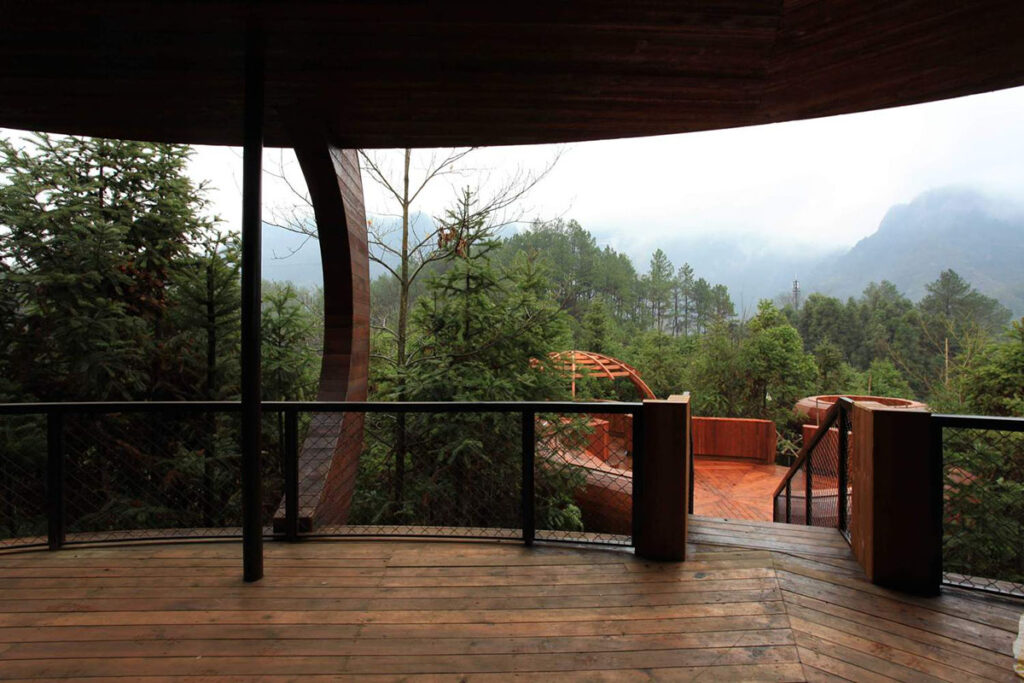
In the dramatic landscapes of Anhui Province in China, the Qiyun Mountain UFO Treehouse designed by Atelier Design Continuum takes a futuristic approach to forest living. Suspended above the ground like a hovering spacecraft, the structure resembles a UFO gently resting within the forest canopy. Its circular metallic form contrasts sharply with the surrounding greenery, creating a visually captivating architectural statement. Despite its futuristic appearance, the treehouse is designed with environmental awareness. Lightweight construction techniques ensure minimal impact on the forest floor, while the elevated structure preserves the natural terrain below. Large windows and skylights allow visitors to observe the surrounding mountains and forests from an entirely new perspective. At night, the illuminated structure appears almost otherworldly floating quietly among the trees. The Qiyun Mountain UFO demonstrates how contemporary architecture can experiment with bold forms while still respecting the landscape it inhabits.
8. The Trillium by Awakening Experiencias – Yucatán, Mexico
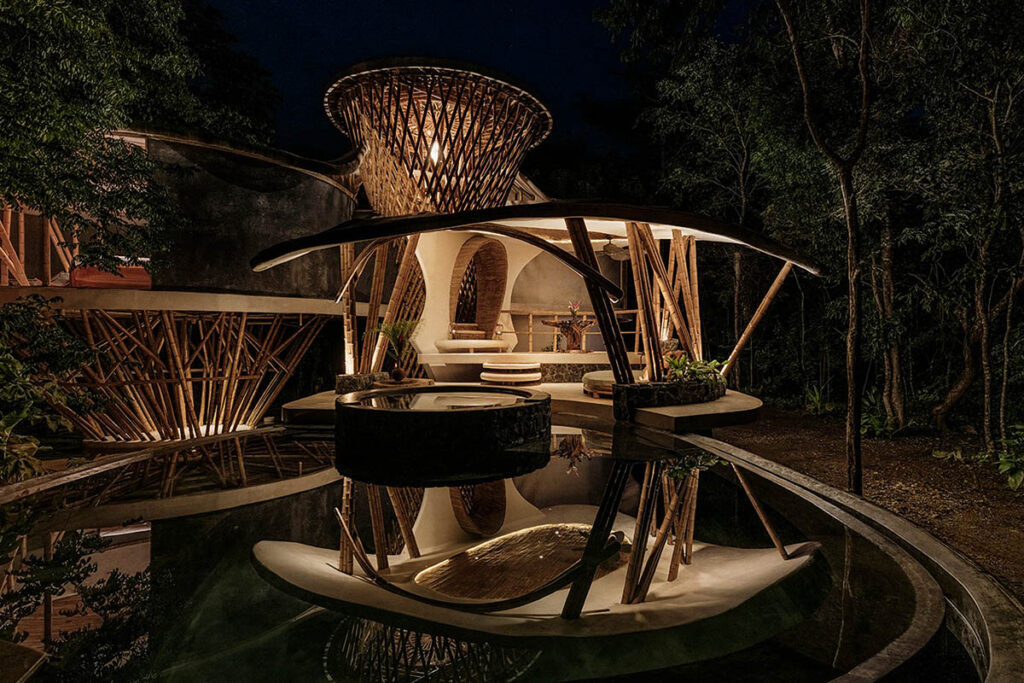
Nestled within the lush jungles of Mexico’s Yucatán Peninsula, The Trillium created by Awakening Experiencias blends biophilic design with immersive nature experiences. Inspired by the three-petaled trillium flower, the structure features a triangular layout that opens outward toward the surrounding jungle canopy. The design maximizes airflow and natural lighting while creating a harmonious relationship between indoor and outdoor spaces. Constructed using sustainable wood and natural materials, the treehouse emphasizes minimal environmental impact. Elevated platforms and walkways preserve the forest floor, allowing native vegetation to thrive undisturbed. Guests staying in The Trillium experience the sights and sounds of the jungle up close from rustling leaves to distant bird calls creating a powerful sense of connection with the natural world.
9. Woodnest by Helen & Hard — Odda, Norway
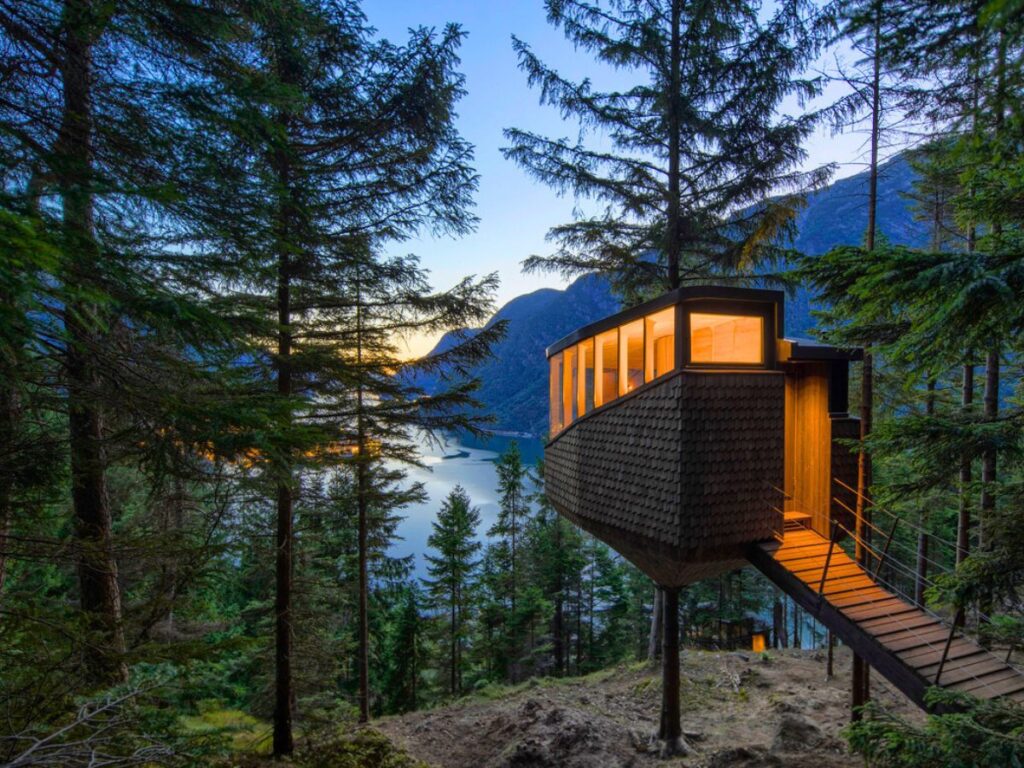
Perched high above the breathtaking Hardangerfjord in Norway, Woodnest designed by Helen & Hard offers one of the most spectacular treehouse experiences in the world. These minimalist wooden cabins are anchored carefully between pine trees overlooking dramatic fjord landscapes. Their cylindrical forms resemble small bird nests tucked into the forest canopy. Constructed using locally sourced timber, Woodnest reflects Scandinavian design principles—simplicity, functionality, and deep respect for nature. Inside, the interiors feature warm wood paneling, compact living spaces, and panoramic windows that frame sweeping views of mountains and water. The design philosophy behind Woodnest prioritizes minimal intervention. The structures are attached to trees using specialized supports that allow the trees to grow naturally without damage. The result is a serene retreat where architecture feels almost invisible within the vast Norwegian landscape.
10. Tree Tent by Tree Tents International – Dalarna, Sweden

In the forests of Dalarna, Sweden, Tree Tent by Tree Tents International offers a radically different interpretation of the treehouse concept. Instead of traditional wooden cabins, these innovative structures resemble floating tents suspended between trees. Using strong tension systems and lightweight materials, the tents hover above the forest floor, creating a unique camping experience. The circular tent design distributes weight evenly between surrounding trees, ensuring both stability and minimal environmental disturbance. The elevated position provides panoramic views of the surrounding woodland while keeping visitors immersed in nature. The circular tent design distributes weight evenly between surrounding trees, ensuring both stability and minimal environmental disturbance. The elevated position provides panoramic views of the surrounding woodland while keeping visitors immersed in nature. Inside, the tents feature comfortable sleeping spaces, mesh windows, and protective canopies that shield guests from weather while maintaining a close connection to the outdoors. The Tree Tent represents a modern evolution of treehouse design—lightweight, portable, and perfectly aligned with sustainable outdoor living.
The Philosophy Behind Treehouse Architecture
What unites these remarkable structures is a shared philosophy: architecture should coexist with nature rather than dominate it.
Treehouses represent a shift away from traditional building practices that often reshape landscapes to accommodate structures. Instead, these designs adapt to the existing environment working around trees, preserving natural terrain, and minimizing ecological impact.
Several key principles define modern treehouse architecture:
- Sustainable Materials
Timber, bamboo, and reclaimed wood are widely used because they are renewable, biodegradable, and visually harmonious with natural surroundings. - Minimal Environmental Impact
Many treehouses rely on lightweight construction techniques that avoid damaging tree roots or forest ecosystems. - Passive Design Strategies
Natural ventilation, daylighting, and insulation reduce energy consumption while maintaining comfort. - Integration with Landscape
Rather than standing apart from nature, treehouses become part of the landscape itself.
Living Among the Trees
Treehouses tap into something deeply human the desire to reconnect with nature. Suspended above the ground, surrounded by leaves and branches, these spaces offer a rare sense of perspective and tranquility. They remind us that architecture doesn’t always need to be monumental to be meaningful. Sometimes, the most powerful designs are those that quietly blend into their surroundings. Whether perched in Nordic forests, tropical jungles, or ancient woodlands, these treehouses demonstrate the extraordinary potential of thoughtful architecture. They are not just places to stay they are experiences that redefine how we interact with the natural world.